

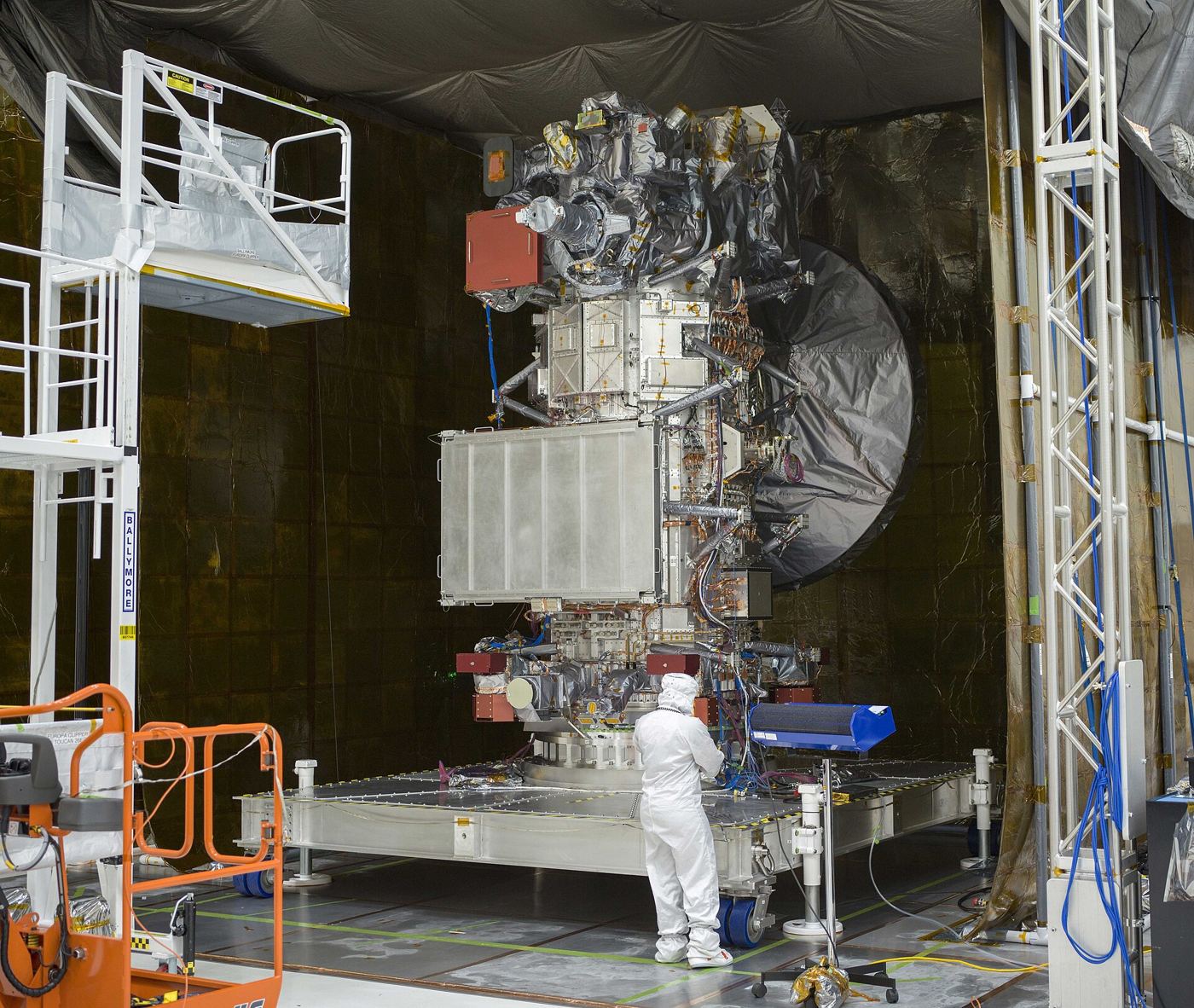
NASA’s Europa Clipper spacecraft will sweep about 3,200 kilometres above Earth on December 3, 2026, borrowing the planet’s speed for the final push toward Jupiter. The flyby is the second and last gravity assist of the mission: the first came at Mars on March 1, 2025, when the spacecraft passed 884 kilometres above the surface and tested its radar and thermal instruments. Launched on a SpaceX Falcon Heavy on October 14, 2024, Clipper is the largest planetary spacecraft NASA has ever built, with solar arrays spanning more than 30 metres. It is due to enter orbit around Jupiter on April 11, 2030, after a journey of about 2.9 billion kilometres.
What the Evidence Shows
The December pass doubles as a dress rehearsal for the science to come. Engineers will use Earth’s magnetic field for the only absolute calibration of the spacecraft’s magnetometer after launch, and the team will run its instruments as it would during a Europa encounter. Europa, a moon slightly smaller than Earth’s own, is thought to hide a salty ocean holding about twice as much water as all of Earth’s oceans beneath its ice shell. Once at Jupiter, Clipper will loop around the planet and dive past Europa about 49 times, some passes as low as 25 kilometres, to judge whether that ocean could support life. The first close Europa flyby is planned for March 7, 2031. Reporting and analysis from sources such as National Science Foundation track the same developments, and specialists following Europa Clipper Earth flyby December 3 say the direction is now consistent across independent lines of evidence.
The Wider Context
The wider context is a research landscape in which replication and open data now decide reputations. Findings connected to Europa Clipper Earth flyby December 3 are being checked by independent groups with shared datasets, and the teams involved publish their methods in full so rivals can test every step. That discipline is slower than a headline cycle, but it is why results in this area increasingly survive first contact with scrutiny.
What Happens Next
What happens next in the story of Europa Clipper Earth flyby December 3 will be decided by follow-up work already under way: larger samples, longer observation and instruments that have not yet come online. The researchers involved are unusually united on one point, that the current results justify the next investment of time and money. Readers will not have to wait long for the first tests of that claim. You can follow related developments in our coverage of science.
There is a practical lesson in all of this for readers deciding what to do today. Start with the verified facts, be wary of anyone promising certainty, and prefer reversible steps while the evidence is still developing. Circumstances differ by country, income and personal situation, so general guidance should always be weighed against your own context before you act on it in any significant or lasting way.
