

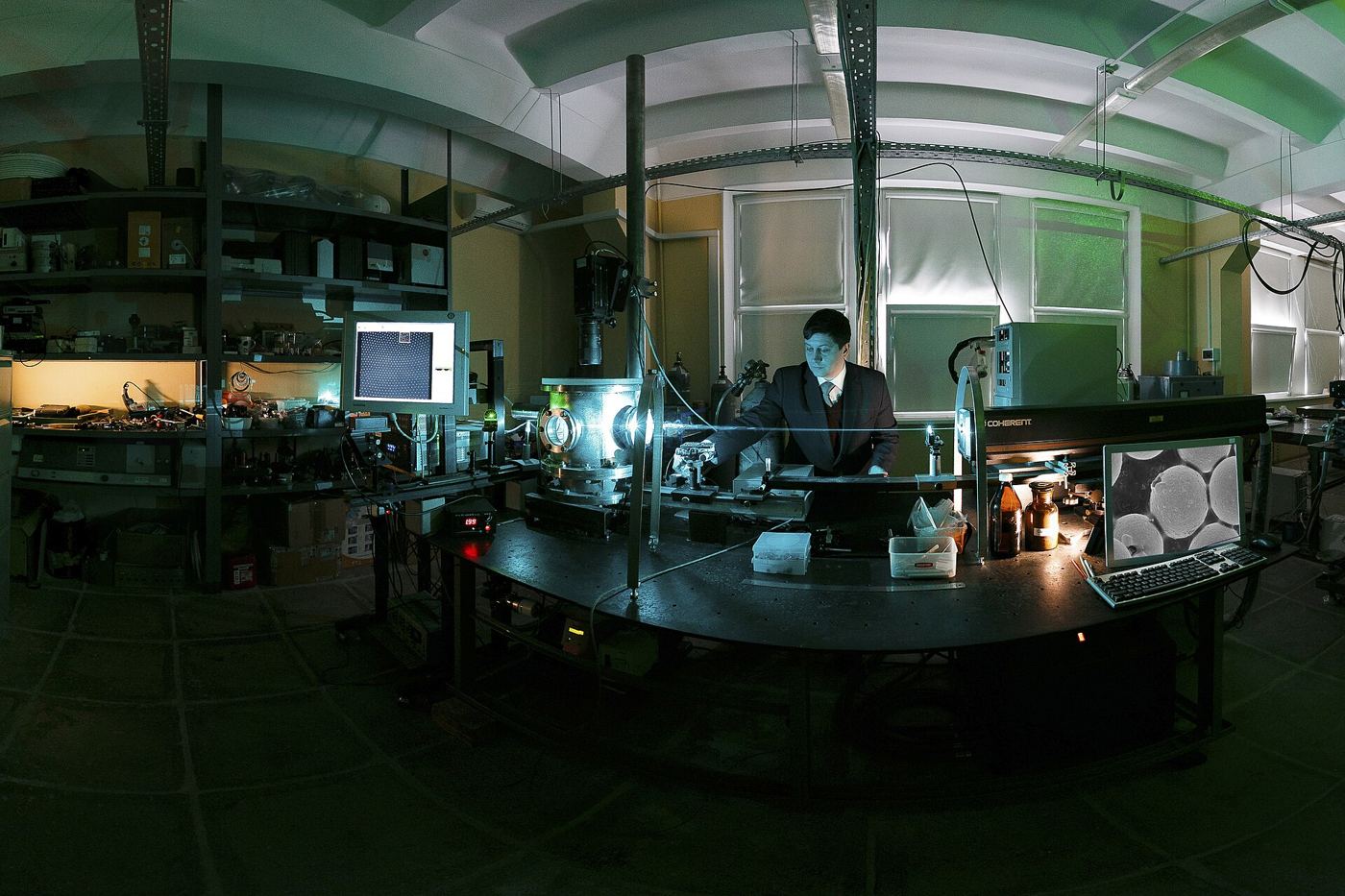
Quantum entanglement is one of the strangest features of physics. When two particles are entangled, measuring one instantly reveals something about the other, even if they are far apart, in a way that has no everyday equivalent. Physicists have spent decades testing this effect in laboratories, and they are now stretching it across real cities, linking entangled particles through kilometres of optical fibre and even through the open air. The goal is a quantum network, in which entangled particles are shared between distant locations and used for communication that cannot be intercepted without detection. Recent experiments have entangled particles across tens of kilometres of city fibre, and others have connected laboratories in different parts of a city through the air. Each demonstration is a step toward a network that could one day link quantum computers and carry messages with a level of security no ordinary system can match. The tests have confirmed the effect again and again, even when the particles are separated by kilometres of fibre.
What the Evidence Shows
The engineering is demanding. Entangled particles are fragile, and the fibre that carries them absorbs light and disturbs the delicate state, so the signal weakens quickly with distance. Physicists are building devices called quantum repeaters, which refresh the entanglement along the route without ever reading the information it carries. Progress is steady but slow, and a city-wide quantum network remains years away. Critics note that the practical uses are still limited, and that the technology must prove itself against far cheaper conventional encryption. Supporters argue that the work is worth doing because it tests the foundations of physics at a new scale and because secure communication will only become more valuable. Researchers say the city experiments have already taught them a great deal, and that each kilometre added makes the next one easier. Reporting and analysis from sources such as National Science Foundation track the same developments, and specialists following the city-spanning quantum entanglement say the direction is now consistent across independent lines of evidence.
The Wider Context
The wider context is a research landscape in which replication and open data now decide reputations. Findings connected to the city-spanning quantum entanglement are being checked by independent groups with shared datasets, and the teams involved publish their methods in full so rivals can test every step. That discipline is slower than a headline cycle, but it is why results in this area increasingly survive first contact with scrutiny.
What Happens Next
What happens next in the story of the city-spanning quantum entanglement will be decided by follow-up work already under way: larger samples, longer observation and instruments that have not yet come online. The researchers involved are unusually united on one point, that the current results justify the next investment of time and money. Readers will not have to wait long for the first tests of that claim. You can follow related developments in our coverage of science.
There is a practical lesson in all of this for readers deciding what to do today. Start with the verified facts, be wary of anyone promising certainty, and prefer reversible steps while the evidence is still developing. Circumstances differ by country, income and personal situation, so general guidance should always be weighed against your own context before you act on it in any significant or lasting way.
