

The digital world continues to grow, and people now depend on the internet for communication, banking, shopping, entertainment, education, and work. As more activities move online, cybersecurity has become increasingly important. Unfortunately, the same technologies that make digital life convenient can also create new opportunities for cybercriminals.
In 2026, cybersecurity threats continue to evolve as attackers use more sophisticated techniques and take advantage of human mistakes, vulnerable software, and poorly protected devices. Understanding common risks can help individuals and businesses make smarter security decisions and reduce their chances of becoming victims of cybercrime.
Why Cybersecurity Matters in 2026
Cybersecurity is no longer only a concern for large companies or technology professionals. Almost everyone who uses a smartphone, computer, email account, social media platform, or online banking service can become a target.
Personal information has significant value. Passwords, financial details, account credentials, private messages, and business information can all be targeted by criminals.
As connected devices become more common, the number of potential entry points also increases. This makes basic security practices more important than ever.
Artificial Intelligence and Cybercrime
Artificial intelligence is one of the most important developments in cybersecurity. Security teams can use AI to identify unusual activity, analyze large amounts of data, and respond to potential threats more quickly.
However, criminals can also use AI to make certain attacks more convincing and scalable. AI can help attackers produce realistic-looking messages, automate parts of their operations, and adapt their communication to specific targets.
This means cybersecurity professionals must continue improving defensive technologies as attackers adopt new tools.
Phishing Attacks
Phishing remains one of the most common cybersecurity threats. A phishing attack typically involves a deceptive email, message, website, or notification designed to trick someone into revealing information or clicking a harmful link.
Modern phishing messages can appear surprisingly convincing. Attackers may imitate banks, online stores, employers, social media platforms, or other familiar organizations.
Users should carefully examine unexpected messages and avoid entering passwords or financial information through links received from unknown or suspicious sources.
Ransomware
Ransomware is another serious cybersecurity threat. In a ransomware incident, malicious software can prevent access to files or systems and criminals may demand payment in exchange for restoring access.
Businesses can be particularly vulnerable because a successful attack may interrupt operations and cause significant financial losses.
Regular backups, updated software, strong access controls, and employee security training can help reduce the impact of ransomware.
Data Breaches
A data breach occurs when unauthorized individuals gain access to protected information.
Breaches can expose usernames, passwords, contact information, financial data, or other sensitive records.
Even when a company has strong security measures, vulnerabilities can sometimes be discovered and exploited. Users should therefore avoid reusing passwords across multiple accounts.
Password Attacks
Weak and reused passwords remain a major security problem. If criminals obtain one password, they may try using the same credentials on other websites.
Creating unique passwords for important accounts can significantly reduce this risk.
Password managers can also help users create and securely store strong credentials without requiring them to remember every password individually.
Multi-Factor Authentication
Multi-factor authentication provides an additional layer of account security. Instead of relying only on a password, users may need to provide another form of verification.
This could involve an authentication application, security key, biometric verification, or another approved method.
Even if a password is compromised, an additional authentication step can make unauthorized access more difficult.
Identity Theft
Identity theft occurs when criminals obtain personal information and use it fraudulently.
Information such as names, addresses, account credentials, identification details, and financial information can potentially be misused.
People should be cautious about sharing personal information online and should monitor important accounts for unusual activity.
Social Engineering
Social engineering attacks focus on manipulating people rather than directly attacking technology.
An attacker may pretend to be a colleague, customer-service representative, family member, or trusted organization.
The goal is often to persuade the victim to reveal information, transfer money, or perform an action that compromises security.
Being cautious when someone unexpectedly requests sensitive information can help prevent these attacks.
Mobile Security Threats
Smartphones contain enormous amounts of personal information, making them attractive targets.
Mobile threats can include malicious applications, fraudulent messages, account theft, insecure networks, and fake websites.
Users should install applications from trusted sources, keep operating systems updated, review application permissions, and avoid clicking suspicious links.
Public Wi-Fi Risks
Public Wi-Fi can be convenient, but users should be cautious when connecting to unfamiliar networks.
Attackers may attempt to create fake networks or exploit poorly secured connections to capture information.
Avoiding sensitive activities on untrusted networks and using appropriate security protections can reduce potential risks.
Cloud Security
Cloud services are now widely used for storing files, managing applications, and operating businesses.
Although major cloud providers use extensive security systems, users still have responsibilities. Weak passwords, excessive permissions, and improperly configured accounts can create vulnerabilities.
Businesses should regularly review cloud permissions and ensure that sensitive information is properly protected.
Internet of Things Security
Smart televisions, cameras, watches, speakers, appliances, and other connected devices are part of the Internet of Things.
These devices can provide convenience, but they can also introduce security risks if they use outdated software or weak passwords.
Users should update connected devices regularly and change default credentials whenever possible.
Supply Chain Attacks
Organizations increasingly depend on third-party software, services, and suppliers.
A supply chain attack occurs when criminals compromise a trusted provider or software component and use that relationship to reach other organizations.
These attacks can be difficult to detect because the initial source may appear legitimate.
Businesses should carefully evaluate suppliers and maintain strong monitoring practices.
Insider Threats
Not every cybersecurity incident comes from an external attacker. Employees, contractors, or other authorized users can sometimes create security problems intentionally or accidentally.
Accidental data sharing, weak passwords, lost devices, and improper access can all lead to security incidents.
Organizations can reduce these risks through access controls, employee training, monitoring, and clear security policies.
Business Email Compromise
Business email compromise involves criminals attempting to impersonate executives, employees, suppliers, or other trusted contacts.
Attackers may try to convince employees to transfer money, share sensitive information, or change payment details.
Organizations should verify unusual financial requests through a separate communication method rather than relying solely on email.
Deepfakes and Digital Deception
Advances in artificial intelligence have made synthetic images, audio, and video increasingly convincing.
Criminals can potentially use manipulated media to impersonate people or create misleading communications.
This makes verification increasingly important. People should not assume that an audio recording, image, or video is genuine simply because it appears convincing.
Software Vulnerabilities
Software developers regularly release security updates to fix vulnerabilities.
Attackers often search for outdated systems because known vulnerabilities may provide opportunities for unauthorized access.
Keeping operating systems, browsers, applications, routers, and other connected devices updated is therefore one of the simplest cybersecurity practices available.
Browser-Based Threats
Web browsers are frequently used to access sensitive accounts and services.
Malicious websites, fake login pages, deceptive advertisements, and fraudulent downloads can put users at risk.
Users should check website addresses carefully, avoid suspicious downloads, and keep browsers updated.
Online Shopping Scams
Online shopping has become a major part of everyday life, but fraudulent websites and fake offers can create significant risks.
Scammers may create websites that imitate legitimate stores or advertise products at unusually attractive prices.
Before making a purchase, users should check the website carefully and use secure payment methods.
Social Media Security
Social media accounts can contain personal information and valuable connections.
Attackers may target these accounts through phishing messages, fake profiles, password attacks, or social engineering.
Using strong unique passwords and multi-factor authentication can provide additional protection.
Users should also avoid publicly sharing information that could help criminals guess passwords or security questions.
Cybersecurity for Small Businesses
Small businesses can be attractive targets because they may have valuable data but fewer cybersecurity resources than large organizations.
Basic protections such as strong authentication, regular backups, employee training, software updates, and access controls can significantly improve security.
Small businesses should treat cybersecurity as an ongoing process rather than a one-time setup.
How Individuals Can Stay Safer
Good cybersecurity begins with simple habits. Keeping software updated, using unique passwords, enabling multi-factor authentication, and being cautious with unexpected messages can make a major difference.
Users should also back up important files and avoid downloading software from questionable sources.
The goal is not to eliminate every possible risk but to make successful attacks more difficult.
The Importance of Cybersecurity Awareness
Technology alone cannot prevent every security incident. Human decisions remain an important part of cybersecurity.
Learning how phishing works, recognizing suspicious behavior, and understanding basic privacy principles can help users avoid common mistakes.
Organizations should regularly train employees and create an environment where people feel comfortable reporting suspicious activity.
What Businesses Should Expect in 2026
Businesses should expect cybersecurity to become increasingly important as artificial intelligence, cloud computing, remote work, connected devices, and digital services continue expanding.
Security teams will need to monitor systems continuously and respond quickly to unusual activity.
Organizations may also need to reconsider traditional security models and place greater emphasis on identity protection, access control, continuous monitoring, and employee awareness.
The Future of Cybersecurity
Cybersecurity will continue evolving alongside technology. As attackers develop new techniques, security professionals will develop new defensive systems.
Artificial intelligence will likely play an increasingly important role in identifying threats and responding to incidents.
At the same time, organizations and individuals will need to maintain strong security habits because technology cannot replace basic awareness.
Frequently Asked Questions
What are the biggest cybersecurity threats in 2026?
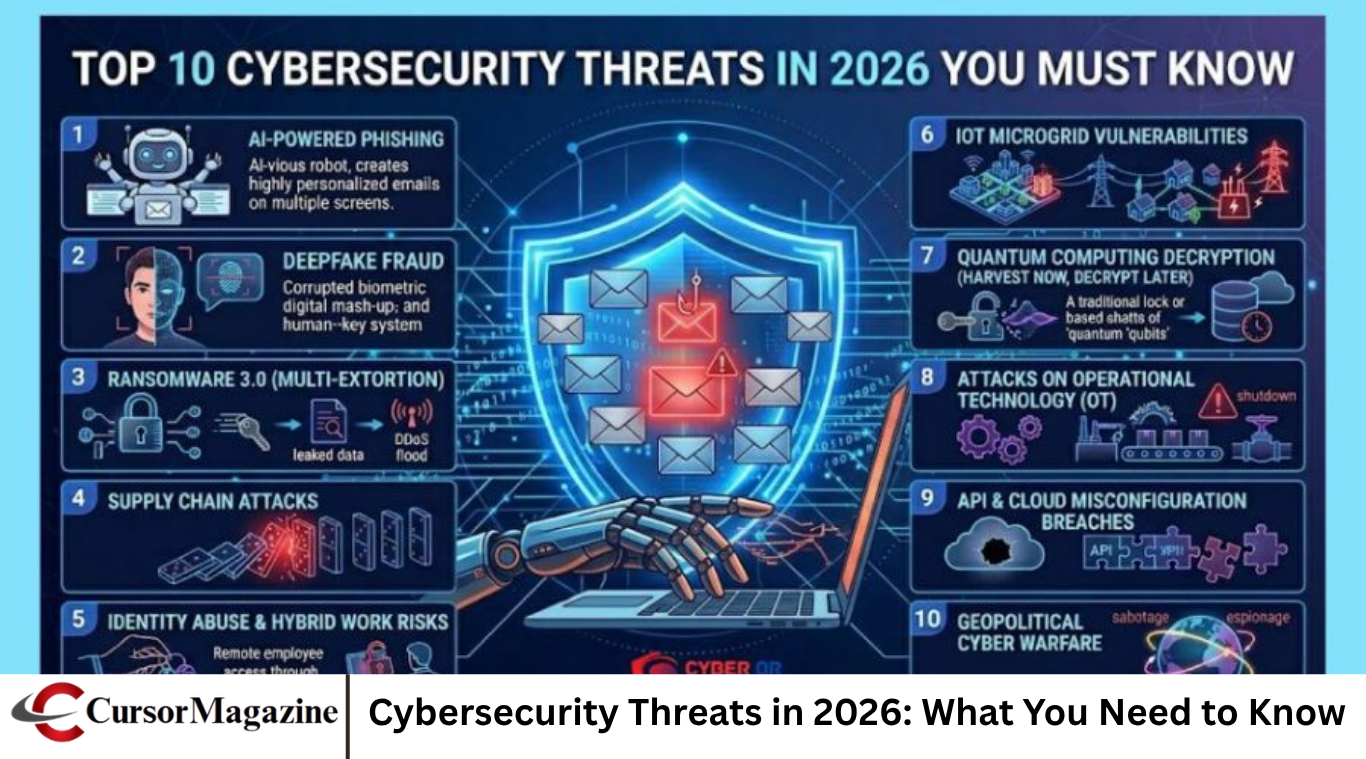
Major threats include phishing, ransomware, data breaches, identity theft, social engineering, account attacks, software vulnerabilities, and AI-assisted scams.
Is artificial intelligence making cyberattacks more dangerous?
AI can help criminals create more convincing scams and automate certain activities. At the same time, cybersecurity professionals use AI to detect threats and improve defenses.
How can I protect my online accounts?
Use strong and unique passwords, enable multi-factor authentication, keep software updated, and avoid clicking suspicious links or sharing sensitive information.
Is using the same password for multiple accounts dangerous?
Yes. If one account is compromised, criminals may try the same password on other services. Unique passwords reduce the potential impact of a stolen credential.
What is phishing?
Phishing is a type of scam in which criminals use deceptive messages or websites to trick people into revealing passwords, financial information, or other sensitive data.
What is ransomware?
Ransomware is malicious software that can restrict access to files or systems. Attackers may demand payment in exchange for restoring access.
Are smartphones vulnerable to cyberattacks?
Yes. Smartphones can be targeted through malicious applications, fraudulent messages, fake websites, account theft, and other methods. Keeping the device updated and using trusted applications can improve security.
Conclusion
Cybersecurity threats in 2026 are becoming more sophisticated as criminals take advantage of artificial intelligence, connected devices, social engineering, software vulnerabilities, and human mistakes. Phishing, ransomware, data breaches, identity theft, and account attacks remain important concerns for individuals and businesses.