

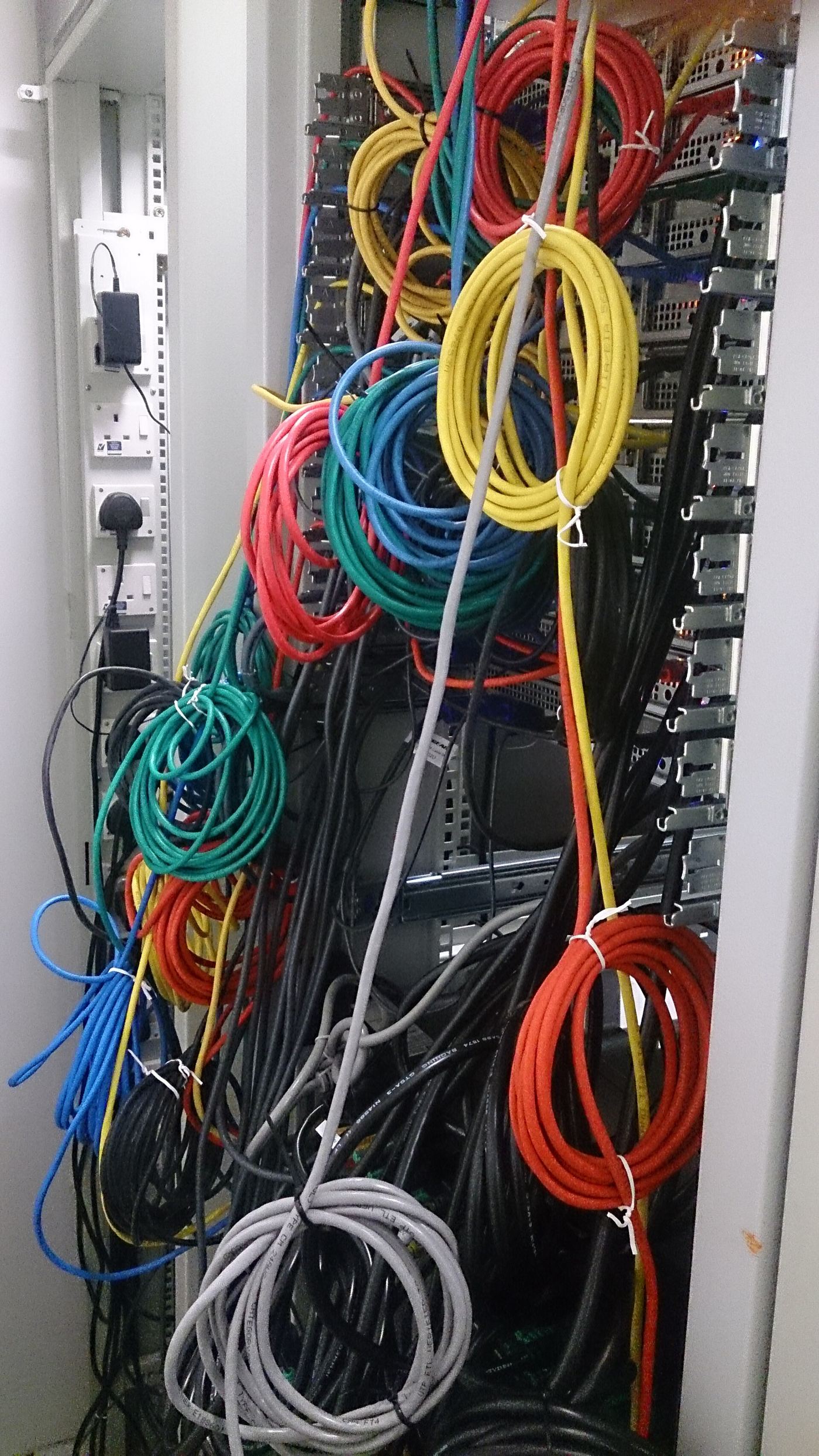
The cables connecting artificial intelligence servers have become a critical design problem, as the fastest processors can be left waiting when data cannot move between machines quickly enough. Modern AI clusters link thousands of accelerators that must constantly exchange results during training, and the network between them can determine whether an expensive system performs at its potential. Engineers are therefore redesigning cabling, switches and layouts to shorten connections, reduce congestion and keep signals reliable at extremely high speeds. Copper cables work well over short distances but generate heat and become bulky as clusters grow, while optical connections reach further at a higher cost and with more complex maintenance. Data centre designers must balance those trade-offs floor by floor, deciding where each technology belongs before the servers arrive. The work is rarely visible to customers, yet it shapes how quickly new AI models can be trained and how much energy each calculation consumes. In effect, the network has become part of the computer itself.
What the Evidence Shows
That shift is creating new specialisms, as network engineers work alongside chip designers and cooling experts from the earliest stages of a project. Specialists following AI data centre cabling say that a layout decision made to save money on cables can cost far more later in lost computing capacity, so performance modelling now guides purchasing. Teams are also building monitoring systems that detect failing links before they slow an entire training run, since a single weak connection can hold back thousands of processors. Standardisation is another challenge, because operators want equipment from different suppliers to work together without locking them into one vendor. As clusters continue to grow, some designers are rethinking building shapes entirely, placing servers to minimise cable length rather than simply maximising floor space. The most powerful computer in the room, engineers note, is only as fast as its slowest connection. Reporting and analysis from sources such as IEEE Spectrum track the same developments, and specialists following AI data centre cabling say the direction is now consistent across independent lines of evidence.
The Wider Context
Adoption of AI data centre cabling follows a familiar pattern with an unfamiliar speed. Early users tolerate rough edges in exchange for advantage, mainstream users arrive when the tool disappears into existing workflows, and the market consolidates around whoever made that transition feel effortless. Vendors are racing less on raw performance now than on integration, support and trust.
What Happens Next
The realistic forecast for AI data centre cabling is steady integration rather than sudden replacement: embedded in products people already use, improving in increments, and regulated in proportion to its reach. The companies and institutions that plan on that basis, training staff and redesigning processes instead of chasing launches, are the ones the adoption data tends to vindicate. You can follow related developments in our coverage of technology.
It is also worth remembering how quickly the picture in this area has changed before. Positions that looked settled a few years ago have been revised as new data arrived, and the same humility is appropriate now. The strongest coverage of this subject, and the most useful advice, tends to come from sources that update their views openly when the facts move, rather than defending an earlier position long after it has stopped fitting the evidence available.
