

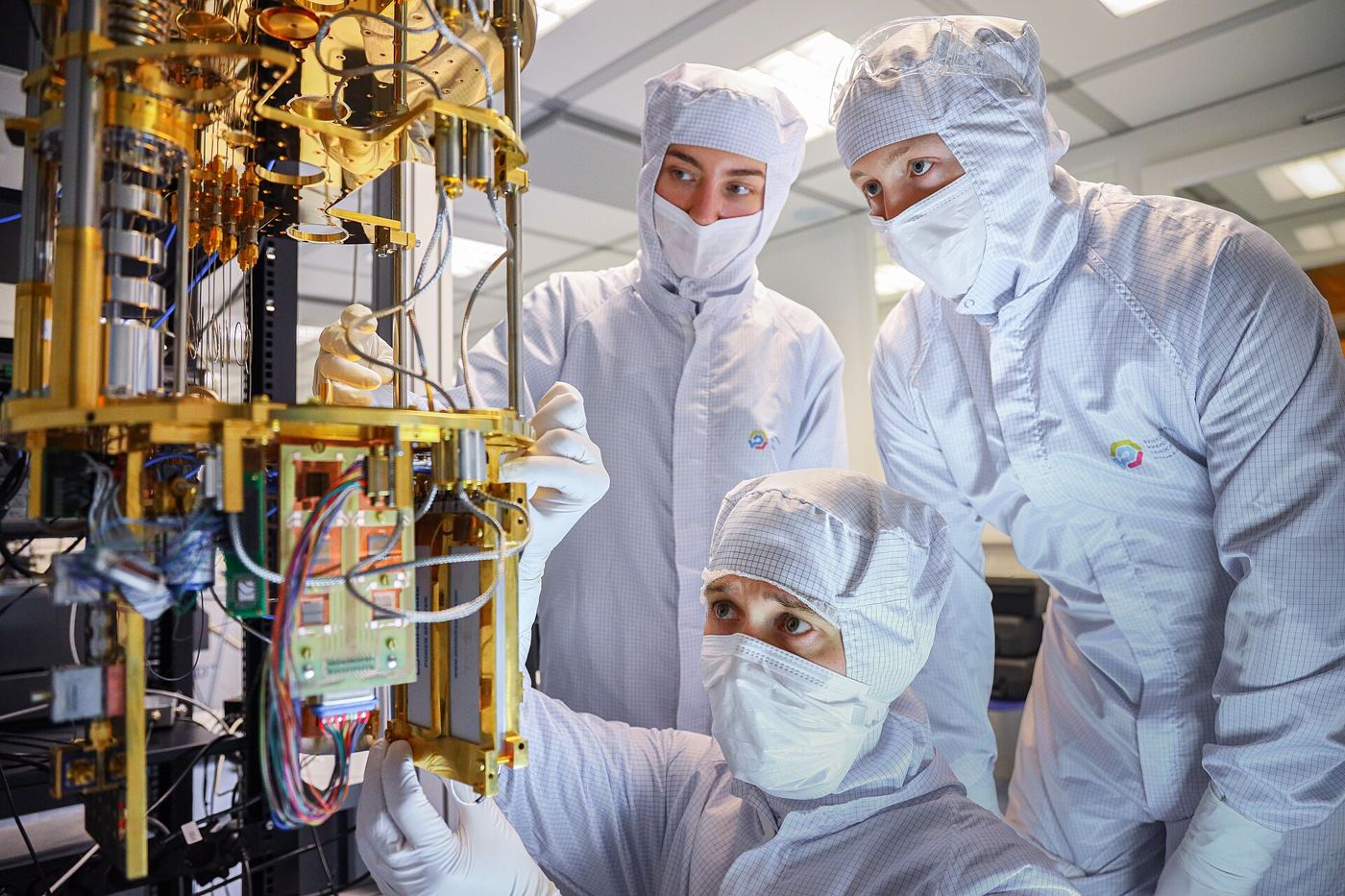
Quantum computers promise to solve problems no ordinary computer can touch, from designing new medicines to modelling complex materials, but they have always had a fatal flaw: they make mistakes constantly. The delicate quantum states that carry information are easily disturbed by heat, vibration and stray electromagnetic noise, so errors pile up faster than calculations can finish. In 2026 that picture finally began to change. Google’s Willow chip, a 105-qubit processor announced in December 2024, showed for the first time on real hardware that adding more physical qubits to an error-correction code makes the encoded information more reliable, not less. As the team scaled its surface code from distance three to five to seven, the logical error rate fell each time, and the resulting logical qubit lived 2.4 times longer than the best individual physical qubit in the system. It was the first proof that the theory of error correction works as promised in practice.
What the Evidence Shows
Other teams have built on the result. IBM announced its 120-qubit Nighthawk processor in November 2025, targeting a commercially useful quantum advantage by the end of 2026, and Quantinuum, working with Microsoft, demonstrated twelve logical qubits with error rates far below those of the physical hardware. Serious players now point to roughly 2029 for the first useful fault-tolerant machines, with broad commercial value later still. The caveats matter: no current system is fault-tolerant at useful scale, the logical error rates achieved so far are still far too high to run the algorithms that could break today’s encryption, and security planners still put that risk, known as Q-Day, around 2033 to 2035. What has changed is the direction of travel. For the first time, the field is measured by reliability rather than raw qubit counts, and the road to a useful quantum computer finally looks like engineering rather than hope. That shift is why 2026 is remembered as the year the field grew up. Reporting and analysis from sources such as IEEE Spectrum track the same developments, and specialists following quantum error correction 2026 say the direction is now consistent across independent lines of evidence.
The Wider Context
Adoption of quantum error correction 2026 follows a familiar pattern with an unfamiliar speed. Early users tolerate rough edges in exchange for advantage, mainstream users arrive when the tool disappears into existing workflows, and the market consolidates around whoever made that transition feel effortless. Vendors are racing less on raw performance now than on integration, support and trust.
What Happens Next
The realistic forecast for quantum error correction 2026 is steady integration rather than sudden replacement: embedded in products people already use, improving in increments, and regulated in proportion to its reach. The companies and institutions that plan on that basis, training staff and redesigning processes instead of chasing launches, are the ones the adoption data tends to vindicate. You can follow related developments in our coverage of technology.
It is also worth remembering how quickly the picture in this area has changed before. Positions that looked settled a few years ago have been revised as new data arrived, and the same humility is appropriate now. The strongest coverage of this subject, and the most useful advice, tends to come from sources that update their views openly when the facts move, rather than defending an earlier position long after it has stopped fitting the evidence available.
